Interview with Captain Crunchwise, the Funky Flight Planner: eating healthy on long flights
Key Takeaways
- Plan meals across the whole travel day, not just the hours onboard.
- Choose familiar backup foods and keep perishables safely chilled.
- Check security, airline, and destination food rules separately.
- Follow individual medical advice rather than rigid meal or hydration formulas.
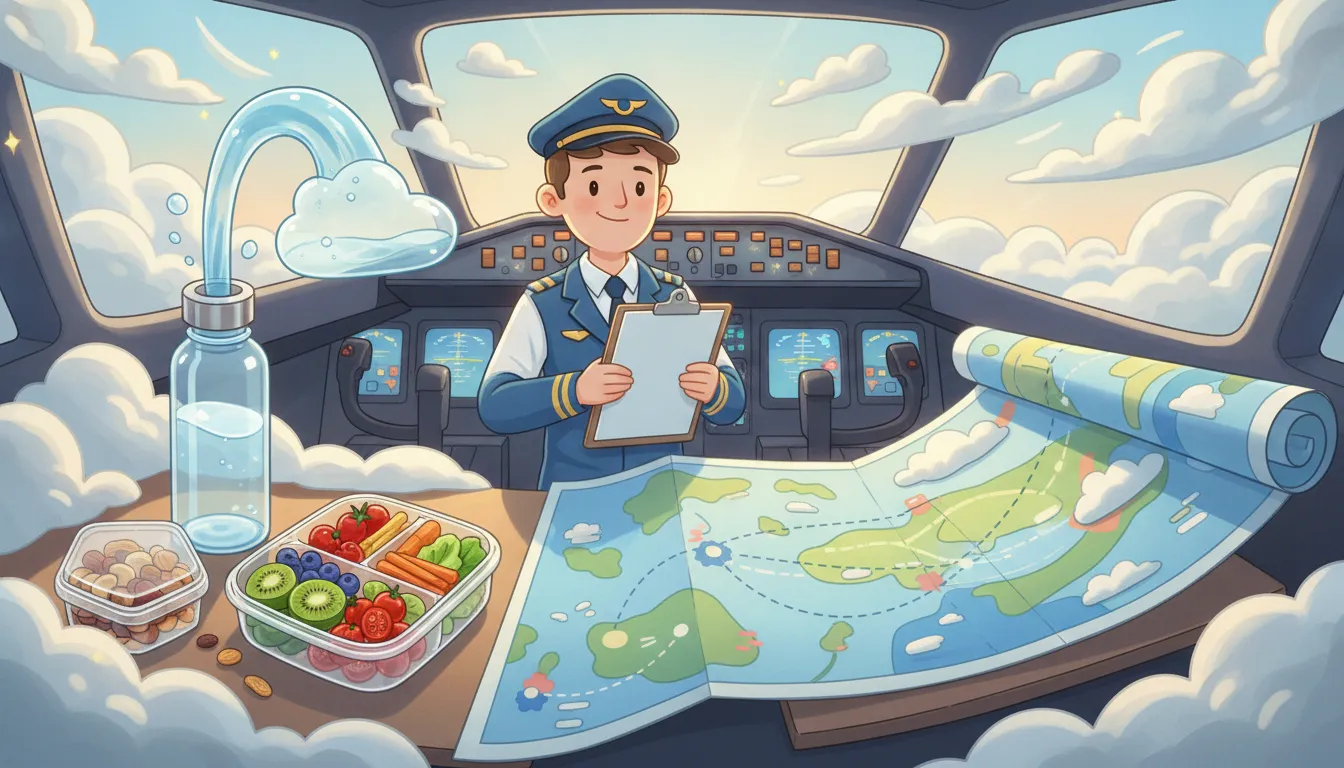
Eating healthy on long flights starts before boarding. Plan a realistic meal, pack a few suitable snacks, keep drinking water accessible, and check the rules for carrying food through security and into your destination.
The goal is not a perfect menu at cruising altitude. It is having enough flexibility that a delayed departure, limited meal choice, or missed airport lunch does not make every food decision for you.
This practical guide uses an illustrative interview with Captain Crunchwise, a fictional travel-planning persona. The answers are editorial guidance, not statements from a real pilot, dietitian, or airline representative. Official nutrition, food-safety, and travel resources are linked where they help you check the details.
What does eating healthy on long flights actually mean?
It means making food choices that fit your nutritional needs, are safe to carry, and work within the limits of a travel day.
That sounds simple. The challenge is that your usual routine disappears. Meals arrive on someone else’s schedule. Storage is limited. You may be choosing from whatever remains at a departure gate rather than what you would normally eat.
A useful approach has four parts:
- Balance: Include a mix of food groups rather than relying entirely on sweets or snack foods.
- Practicality: Choose food you can carry, open, and eat comfortably.
- Safety: Account for temperature, allergies, security screening, and border rules.
- Flexibility: Have a backup without trying to pack your entire kitchen.
The USDA’s MyPlate guidance provides a useful starting point for building varied meals with vegetables, fruit, grains, protein foods, and dairy or fortified alternatives. You do not need every food group in every snack. Think about the overall day.
Most importantly, eating healthy on long flights does not mean eating as little as possible. A plan that leaves you hungry and distracted is not automatically a better plan.
What is the simplest planning framework?
Use the Meal, Backup, Bottle, Border checklist. It turns a broad intention into four decisions you can make before leaving home.
- Meal: Decide where your main travel-day meal will come from: home, the airport, or onboard service.
- Backup: Pack suitable food for a gap between planned meals.
- Bottle: Plan how you will obtain drinking water after security and during the journey.
- Border: Check whether any remaining food can enter your destination or connection country.
For example, your plan might be an airport lunch, a commercially packaged snack, an empty refillable bottle through security, and no fresh-food leftovers at arrival.
Another traveler might bring a properly chilled meal, use it early in the journey, and rely on shelf-stable backups later.
The point is not to follow one universal menu. Eating healthy on long flights becomes easier when each part of the plan has a clear job.
Should you eat before boarding or wait for the onboard meal?
Decide based on hunger, your departure time, and the service information available for your booking.
If you are hungry before boarding, there is little value in treating an uncertain meal-service time as a firm appointment. You can eat beforehand and decide how much of the onboard meal you want later.
If you have recently eaten, you may prefer to wait. Neither choice needs a complicated rule.
Before departure, ask:
- Does the booking include a meal, or only food for purchase?
- Is a special meal confirmed?
- Have you left enough time to buy food without rushing?
- What will you eat if your preferred option is unavailable?
A useful habit for eating healthy on long flights is to avoid arriving at the airport with both an empty stomach and no food plan. That combination leaves you fewer practical choices.
You can also separate two decisions: what you need now and what you might need later. Buying lunch does not remove the value of a small backup snack.
What should a balanced airport meal look like?
Start with the components, not the marketing language on the package.
Look for a protein food, a grain or other starchy food, and some fruit or vegetables. Adapt the combination to what you eat and what is actually available.
Possible examples include:
- A sandwich with a protein filling, plus fruit.
- A rice bowl with beans or another protein and vegetables.
- Oatmeal with fruit and a suitable protein-containing accompaniment.
- A salad with a substantial protein component and bread or another grain.
These are meal-building examples, not claims about a particular airport product. Ingredients, portions, and preparation vary.
For packaged foods, compare similar options using the label. The FDA’s Nutrition Facts label guide explains serving sizes, nutrients, and daily values.
Eating healthy on long flights does not require finding the most expensive salad in the terminal. A straightforward meal that suits your needs can be a better practical choice than something that only sounds nutritious.
What are good snacks to pack for a long flight?
Start with foods that are familiar, easy to portion, and suitable for the storage conditions you can provide.
Depending on your dietary needs and destination rules, possibilities include:
- Whole-grain crackers.
- Commercially packaged roasted chickpeas.
- Nuts or seeds, where appropriate for allergies and airline instructions.
- A packaged snack bar whose ingredients you have checked.
- Dried fruit in a portion that suits your appetite.
- Fresh fruit for consumption during travel, where permitted.
Check the package rather than assuming a category tells you everything. A snack bar, for example, can have very different ingredients from another bar beside it.
Think in combinations, too. Crackers and a suitable protein-containing food offer a different eating experience from crackers alone. Fruit can complement a snack rather than needing to be the entire snack.
For eating healthy on long flights, the best backup is often unremarkable: something you already like, can tolerate comfortably, and will actually eat if the journey runs late.
How much food should you bring?
Plan for the whole travel window, not just the published flight time.
Consider the trip to the airport, time before boarding, connections, and the period between arrival and your next realistic meal. Then identify the gaps your packed food needs to cover.
There is no useful universal answer such as “three snacks per flight.” A traveler with a confirmed meal and a short airport transfer has different needs from someone making several connections.
Use this sequence:
- List the meals you reasonably expect to eat.
- Notice where a missed meal would leave a long gap.
- Pack a manageable backup for that gap.
- Check that you can store everything safely.
- Remove food you are unlikely to use or cannot bring across the border.
Operational steps can also affect when the journey moves forward. This explanation of what happens during an aircraft turnaround provides useful context for the ground activity surrounding departure.
Eating healthy on long flights is about reasonable preparation, not predicting every possible disruption.
Can you bring your own food through airport security?
Often, yes, but the answer depends on the food and the screening authority.
In the United States, the Transportation Security Administration’s food guidance distinguishes solid foods from liquid or gel foods. Items such as spreads, dips, yogurt, and sauces may face different restrictions from solid snacks.
Do not assume a food is treated as a solid simply because you normally eat it with a spoon.
Before packing, check:
- The screening rules at your departure airport.
- Whether you will pass through security again during a connection.
- The rules for any ice packs or cooling materials.
- Whether the airline has additional carriage requirements.
Keep food accessible enough to remove from your bag if requested. Packaging that contains spills and identifies the contents can also make your own handling easier.
For eating healthy on long flights, security-friendly food is useful. But clearing security is only one checkpoint. It does not establish that the same food is allowed through customs after landing.
How do you keep packed meals safe without a refrigerator?
First, separate shelf-stable foods from foods that require refrigeration.
A long flight is not a reason to ignore normal food-storage requirements. If a product must stay chilled, your plan needs a reliable way to keep it chilled until you eat it.
The USDA’s packed-lunch safety guidance explains using insulated containers and cold sources for perishable food.
Count the time from when food leaves refrigeration at home, not from takeoff. Transport, check-in, security, and boarding all belong in that calculation.
A practical checklist is:
- Read the product’s storage instructions.
- Use suitable insulated packaging when required.
- Check whether cooling materials can pass through security.
- Do not assume the crew can refrigerate your personal meal.
- Choose shelf-stable alternatives if safe cooling is uncertain.
Eating healthy on long flights includes avoiding food that has been stored unsafely. A carefully chosen meal loses its advantage if its storage requirements cannot be met.
How should you choose from an onboard meal tray?
Work with what is available rather than judging the tray against an ideal meal you cannot obtain. Look at the main dish, vegetables or fruit, bread or grains, and accompanying foods. Choose the parts that suit your appetite and dietary needs.
You do not have to finish every item simply because it arrived together. Equally, you do not need to reject the entire meal because one component is not something you would usually choose. If information matters for your safety, ask rather than guessing. A dish’s appearance is not a reliable ingredient list.
You can also combine the meal with something you brought. A suitable backup snack may help if the available portion or selection does not meet your needs. The practical principle behind eating healthy on long flights is use what works, supplement what is missing, and avoid turning limited choice into an all-or-nothing decision.
No single tray needs to represent your entire approach to nutrition.
Are special meals automatically healthier?
No. A special-meal label describes a particular requirement or category, not a universal nutritional ranking.
A vegetarian meal, an allergy-related request, and a religious meal address different needs. Do not treat those labels as interchangeable.
Check your airline’s current information for:
- Which meal categories are available on your flight.
- How and when to request them.
- Whether the request is confirmed.
- What ingredient or allergen information the airline can provide.
- Whether the same arrangements apply to connecting flights.
Keep a distinction between a preference and a medical necessity. If an ingredient could cause a serious reaction, you need more than a reassuring meal name.
For eating healthy on long flights, special meals can be one planning tool. They are not a replacement for checking suitability or carrying an appropriate backup when needed.
Avoid assuming that a request made for one segment automatically covers every part of a multi-airline itinerary.
How much water should you drink during a long flight?
There is no single hourly amount that fits every traveler. Fluid needs vary, and some people have medical instructions that limit or otherwise manage intake.
For general planning, make drinking water available rather than relying on memory or an uncertain service schedule. An empty reusable bottle can be useful where the departure airport’s rules and refill facilities allow it.
The CDC’s water and healthier drinks guidance explains that water needs vary with factors such as age, activity, and health circumstances.
A practical approach is to:
- Obtain water after security when possible.
- Drink regularly according to your needs.
- Ask the crew about available drinking-water service.
- Follow any clinician-prescribed fluid guidance.
Eating healthy on long flights is not helped by forcing a rigid drinking schedule copied from someone else’s routine. Accessibility and an appropriate personal plan matter more than an impressive-sounding target.
Do coffee, alcohol, and sweet drinks need to be off-limits?
A blanket rule is less useful than understanding what you are choosing and why. Water is a straightforward default. Other drinks can be considered in the context of your preferences, health needs, and plans for rest. If you are choosing a packaged drink, the Nutrition Facts label can help you understand its added sugars and serving size. If you have been advised to limit caffeine or avoid alcohol, travel does not override that advice.
Be especially careful about combining alcohol with medicines. Ask a pharmacist or clinician about your specific medication rather than relying on general travel tips. One common mistake is making every drink decision automatically: accepting something because it is offered, then repeating that choice without considering whether you actually want it.
Eating healthy on long flights can be as simple as pausing before the drinks trolley arrives. Decide what fits your needs instead of treating every service round as an instruction.
Should you follow destination time when deciding when to eat?
Destination time can be useful planning context, but it should not become a rigid rule that overrides hunger, food safety, or medical needs. For a straightforward travel plan, note when you last ate, when food will next be available, and when you expect to sleep. That gives you a clearer picture than the departure clock alone.
You might choose a full meal before a rest period and keep a smaller snack available afterward. Another traveler may prefer a different pattern. These are planning options, not a treatment for jet lag. Do not change medication-linked meal timing or a clinician-directed eating schedule without appropriate advice.
The CDC’s jet lag guidance provides more detailed context on crossing time zones. For eating healthy on long flights, consistency with your own needs is more useful than trying to execute a complicated timetable while tired and in transit.
What if unfamiliar foods usually make travel uncomfortable?
Build the plan around foods you already know work for you. A long journey is not the most convenient setting for experimenting with a new supplement, a very different eating pattern, or a snack you have never tried. That does not mean every traveler needs the same list of foods to avoid. Tolerance is personal, and a food that bothers one person may be perfectly suitable for another.
Before packing, consider:
- Which foods have caused problems for you before?
- Which familiar meals are easy to obtain or carry?
- Are you packing something because you like it, or only because it has a health-focused label?
- Would a smaller, familiar option be more practical than a large unfamiliar meal?
Eating healthy on long flights should account for comfort without turning individual experiences into universal medical claims. Persistent or significant digestive symptoms deserve advice from a qualified healthcare professional.
How should travelers with allergies or medical dietary needs prepare?
Start with the medical requirement, then build the travel plan around it. General nutrition advice cannot determine whether a meal is safe for a particular allergy or how someone should manage diabetes, kidney disease, or another condition during international travel.
Useful preparation includes:
- Discussing time-zone changes, meals, and medicines with the relevant clinician.
- Checking the airline’s published assistance and meal policies.
- Carrying suitable backup food within screening and border rules.
- Keeping necessary medicines and instructions accessible.
- Knowing what to do if the requested meal is missing or unsuitable.
The CDC’s guidance for severely allergic travelers offers more specific preparation considerations.
Eating healthy on long flights means something different when a dietary restriction is medically necessary. Safety takes priority over variety, presentation, or following a general-purpose meal formula.
Do not describe a meal as allergen-free unless the information available actually supports that conclusion.
What changes when children are traveling?
The same planning principles apply, but the foods and portions need to suit the child’s age, abilities, preferences, and medical needs. Bring familiar options and check any special screening rules for infant or toddler food with the relevant authority. Do not assume adult liquid restrictions apply in exactly the same way to every child-related item.
Keep food accessible to the accompanying adult rather than buried under everything else in the overhead bag. It also helps to separate foods intended for the journey from anything you hope to take through customs. Those are different decisions. For families, eating healthy on long flights does not require a picture-perfect snack collection. A workable plan is more valuable: appropriate food, suitable storage, manageable portions, and a backup if the child does not eat the offered meal.
For age-specific feeding or choking concerns, follow pediatric guidance rather than adapting an adult snack list without checking.
Can eating well on a long flight be affordable?
Yes, the planning approach can be simple without depending on premium products. You do not need a specialty travel supplement, an expensive snack box, or a product marketed specifically for flying. Start with foods already available in your normal shopping routine. Then assess whether they are suitable for transport, safe at the expected temperature, and allowed along your route.
To keep the plan focused:
- Choose a few versatile foods instead of many single-purpose extras.
- Check what your fare includes before buying duplicate meals.
- Compare package contents rather than relying on health claims.
- Pack only what you can reasonably use.
- Include the cost of safe storage when considering a homemade meal.
Eating healthy on long flights is not a shopping category. It is a set of decisions about what you need, what you can carry safely, and what is worth buying along the way.
What food can you take into another country after landing?
That depends on the destination, the product, its ingredients, and sometimes its country of origin.
Do not confuse three separate questions:
- Can the item pass through airport security?
- Can you carry or consume it onboard?
- Can you import it after arrival?
A “yes” to one does not establish a “yes” to the others.
For travel into Canada, consult the Canadian Food Inspection Agency’s personal food-import guidance and follow declaration requirements. Check current rules rather than assuming commercially packaged food is always permitted. Packaging does not erase ingredient restrictions.
Eating healthy on long flights can include fresh food during the journey, but that does not mean you should carry the leftovers across a border. Before arrival, identify what remains and follow official instructions for declaration or disposal.
If you are unsure, ask the relevant border authority rather than guessing.
What are the biggest mistakes to avoid?
The common problems are usually practical, not a lack of nutritional ambition.
- Depending on one meal: A preferred option may not be available.
- Packing perishables without reliable cooling: Food safety starts before you reach the airport.
- Ignoring connections: Another security checkpoint may change what you can carry onward.
- Confusing labels with suitability: “Natural,” “plant-based,” or “special meal” does not answer every nutrition or allergy question.
- Bringing too much: Excess food can create storage, baggage, and arrival problems.
- Following rigid internet rules: Someone else’s fasting or hydration routine may not fit your needs.
- Forgetting customs: Travel snacks can become imported food after landing.
The biggest mindset mistake is treating eating healthy on long flights as a test you either pass or fail. A less-than-ideal meal does not make the rest of the journey irrelevant.
Make the next practical choice available.
What should the final preflight food checklist include?
Keep it short enough to use.
- Confirm the meal plan: Know what you expect to eat before boarding and during the flight.
- Pack a suitable backup: Choose familiar food that meets your dietary needs.
- Check storage: Keep perishables safely chilled or choose shelf-stable alternatives.
- Review screening rules: Include connections, spreads, drinks, and cooling materials.
- Plan for water: Know how you will obtain it after security.
- Verify medical arrangements: Confirm special meals and follow individual clinical advice.
- Check destination restrictions: Know what to declare or leave behind.
That is the foundation of eating healthy on long flights: a reasonable meal, an appropriate backup, safe handling, and enough flexibility to adjust. You do not need to control every service time or airport option. You need a plan that still works when the journey is not perfectly on schedule.
Frequently Asked Questions About Eating Healthy on Long Flights
What is the best food to eat on a long flight?
There is no single best food. Choose a meal or snack that suits your dietary needs, includes useful variety, and can be stored safely. Familiar foods are a practical starting point.
Is it healthier to skip the airplane meal?
Not automatically. Consider your hunger, what you have already eaten, and when food will next be available. Do not skip meals in conflict with medical advice or medication requirements.
Can you bring homemade food on an international flight?
Possibly, but check departure screening rules, connection requirements, safe storage, and destination import restrictions. Permission to carry a food onboard does not necessarily mean you can bring it into another country.
Are nuts always a suitable flight snack?
No food suits everyone. Consider allergies, age-appropriate safety, airline instructions, and destination restrictions. Choose another familiar option when nuts are unsuitable.
What is the easiest first step toward eating healthy on long flights?
Decide where your main meal will come from and pack one suitable backup. Then check storage, screening, and arrival rules before adding more food to your bag.


Comments
Post a Comment