Interview with SEO Hobby Expert, Travel Writer Comparing the Intercontinental Flight Economy Experience
Key Takeaways
- The single-aisle service won overall, led by 32-inch seat pitch, extra width, and strong entertainment.
- The other three services measured 31 inches of pitch, but padding and seat design affected comfort.
- All four returned a $527 round-trip fare in one six-week-advance price check.
- Check the seat map again before departure, bring your own headphones, and protect your foot space.
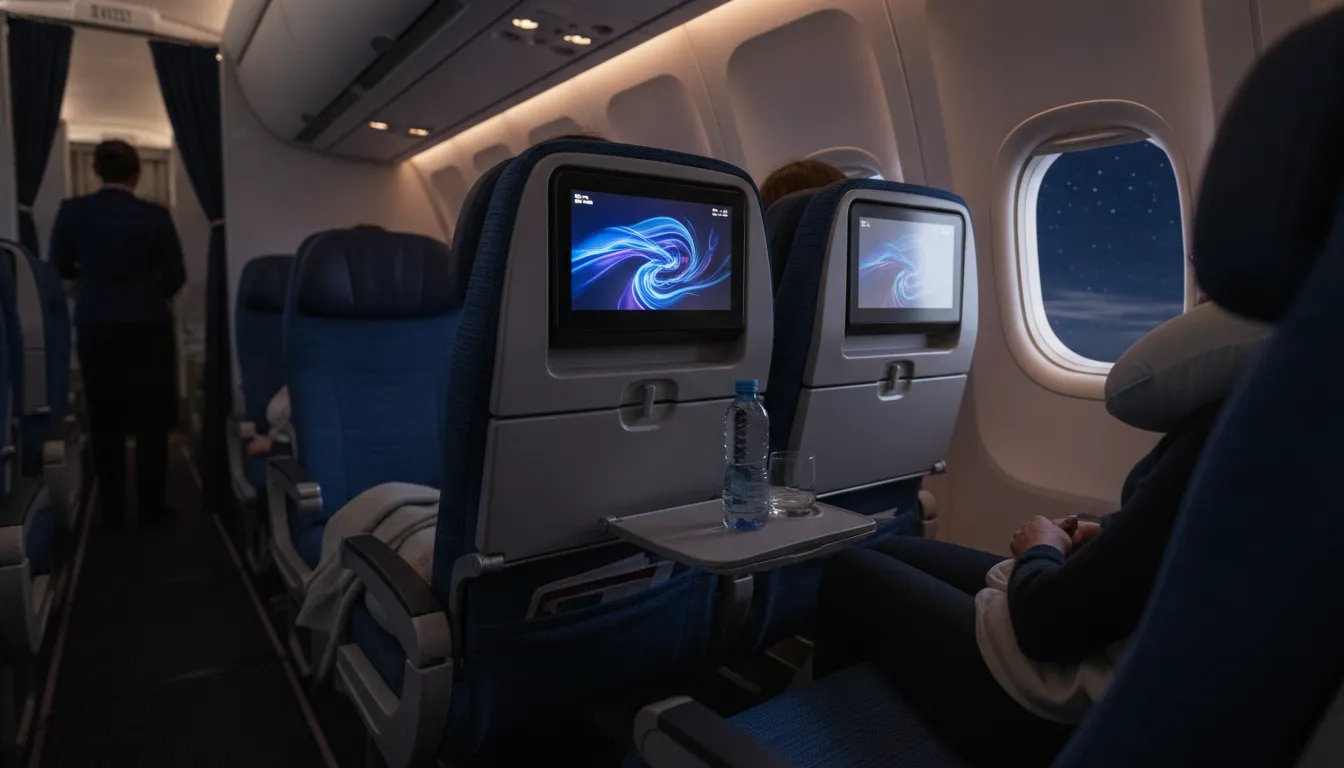
What makes an intercontinental flight comfortable? Before booking, it is easy to focus on the fare, the departure time, and whether you can avoid a middle seat. Once you are several hours into an Atlantic crossing, smaller details start to matter: seat padding, a working screen, water service, and somewhere to put your knees.
Travel writer SEO Hobby Expert and his wife, Miss Ghost, put those details to the test on four economy crossings in six days. They measured seats, compared meals, checked bathrooms, and considered whether the differences justified choosing one service over another.
This adapted interview presents their findings as a practical conversation. The four services are identified by their order in the comparison rather than by carrier name. Prices, menus, connectivity, and cabin conditions describe those particular journeys—not guarantees for a future booking.
What did you want to learn from taking four economy crossings so close together?
I wanted to get beyond the assumptions people make about an intercontinental flight. Does one extra inch of seat pitch really matter? Does an older airplane necessarily feel tired? And how different are the meals once you actually sit down and eat them?
We traveled back and forth across the Atlantic in six days. That made the differences easier to recognize because the previous experience was still fresh. We were comparing the seat we had just spent hours sitting in, not a vague memory from last year.
Our focus was straightforward: seat comfort, entertainment, food, service, cleanliness, and price. Those are the things that shape the economy experience when you are not paying for a premium cabin.
Was this a perfectly controlled intercontinental flight comparison?
No, and that is important. We traveled in both directions, on different aircraft, with different flight lengths and passenger loads. Our first crossing had an announced flying time just under six hours. The final crossing was scheduled for eight hours and 24 minutes.
Some flights were also unusually empty. That gave Miss Ghost the opportunity to stretch out across unoccupied seats, which obviously changes how comfortable economy feels.
So I would treat this as a detailed account of four real journeys, not a promise about every departure. An intercontinental flight involves the aircraft, the crew, the catering, and the seat you actually get. The experience comes from all of those things together.
What stood out when you boarded the first flight?
The first aircraft was about 22 years old, with a main economy layout of three seats, four seats, and three seats across. But the interesting detail was at the back, where the cabin narrowed and a few rows changed to a two-four-two arrangement.
For a couple, that pair of seats is appealing. You get your own little section without sharing it with a third passenger. We chose that arrangement deliberately.
It was an early reminder that researching an intercontinental flight means looking beyond the general cabin description. A single aircraft can contain seating arrangements that feel quite different. The seat map is not something I would leave until the last minute.
How much room and equipment did those first seats provide?
We measured 31 inches of seat pitch and a nine-inch entertainment screen. Each seat had a pillow and blanket, an entertainment controller, a universal power socket, USB charging, and a headphone connection.
The tray table was sturdy and adjustable. That sounds minor until you spend hours using it for meals, drinks, and whatever else you brought along.
Headphones were provided without an extra charge, but they were basic. That became a theme throughout the comparison: bring your own headphones.
The paired seats helped, but they did not turn this intercontinental flight into a spacious experience. Miss Ghost is five feet three inches tall, and even she described the space as cramped. I am five feet eleven, so the limitations were noticeable.
How did the first meal and cabin service perform?
Service started with pretzels. For the main meal, I chose vegetarian pasta, while Miss Ghost had Moroccan-style chicken. The portions were fairly small, but the trays included salad, bread and butter, dessert, and cheese with crackers.
My pasta was surprisingly spicy. Miss Ghost liked her chicken, which had a pronounced parsley flavor. Unfortunately, my tray was missing utensils, so we improvised while the flight attendants were busy.
The trays were collected about 20 minutes after delivery. We saved the cinnamon churro bars for later.
One useful intercontinental flight trick came out of that meal: place the wrapped butter beneath the warm dish briefly. It softens enough to spread more easily. Small improvement, but a welcome one.
What were the strengths and weaknesses of the first crossing?
The bathroom was the standout. During the midpoint check, the floor and surfaces were impressively clean. I gave it five out of five. That kind of upkeep matters on an intercontinental flight, particularly once a cabin has been occupied for several hours.
There were snacks and drinks available at the back, although we did not see many mid-flight service passes beyond occasional rubbish collection.
Entertainment offered 288 movies, but the internet cost $35 for the flight and was not especially fast. That was difficult to get excited about.
Before arrival, we received a warm vegetarian stromboli. It had that familiar filled-pastry character: perfectly serviceable, not particularly memorable. Overall, the flight delivered the basics, with excellent bathroom cleanliness and limited personal space.
What changed on the second intercontinental flight?
The biggest immediate change was the cabin layout: two-three-two. For Miss Ghost and me, having a pair of seats beside the window is an attractive starting point.
This aircraft was about 25 years old, yet the interior felt fresh. That challenged the idea that aircraft age tells you everything about cabin quality. An older airplane can still feel well cared for.
We again measured 31 inches of pitch, but the screen increased to 10 inches. There were 204 movies, a pillow and blanket at each seat, USB charging beneath the screen, and a shared power outlet.
The tray table was sturdy, although less adjustable than the first one. On an intercontinental flight, those little differences gradually become part of your overall impression.
Did the second service feel more attentive?
Yes. Service began with a warm towel and a drink, and the internet was both free and impressively fast during our journey.
Later, flight attendants walked through the cabin with cups of water more than once. There were also snacks available at the back. It was not elaborate service, but it made us feel looked after.
That is something I notice on an intercontinental flight. You do not necessarily need a lot of attention. Sometimes you just want water to arrive without having to leave your seat or find someone to ask.
The cabin was lightly occupied, too. Miss Ghost found an empty row nearby and could lie down. Wonderful when it happens—but not something to build a booking decision around.
Was the second flight’s food better?
Not clearly. I had pesto chicken, and Miss Ghost chose pasta with mascarpone sauce. The flavors were milder than on the first crossing, and the overall meal felt less substantial.
There was a grain salad and crackers, but no bread, butter, or cheese. If you were judging only the amount of food on the main tray, the first service had the advantage.
The tiramisu, though, was excellent. Trays disappeared about 15 minutes after delivery.
Before landing, we received pizza-style snacks, with meat and vegetarian versions, followed by chocolates. Miss Ghost particularly liked those. My takeaway was that intercontinental flight catering rarely produces a clean sweep: one service might win on quantity while another delivers the better dessert.
How comfortable was the second seat by the end?
I thought it was a little more comfortable than the first, despite the identical pitch measurement. The padding seemed better, and after roughly seven hours that mattered.
This is why I would not reduce an intercontinental flight seat to one number. Pitch is useful, but the cushion and the shape of the seat also influence how the space feels.
The bathroom was generally clean, although there was some liquid on the floor. I rated it four and a half out of five, slightly below the first flight.
And there is a practical lesson there: wear shoes to the bathroom. Even a reasonably well-maintained cabin is not somewhere I would walk barefoot.
Why was the third aircraft such a different experience?
It was a much newer, single-aisle aircraft, about three years old, with roughly half the passenger capacity of the larger airplanes we had used. Economy was arranged three-three.
We had an aisle and a window seat with the middle seat empty, which helped. But even allowing for that, the seat itself made a strong first impression.
We measured 32 inches of pitch—one more inch than on the other services—and a 10-inch screen. The seat also felt wider.
It was an interesting intercontinental flight trade-off. The overall cabin felt smaller, but the space immediately around us felt more generous. A bigger airplane does not automatically mean a more comfortable economy seat.
What amenities made the third service stand out?
The blanket was noticeably plush, although there was no pillow. We also received a small amenity kit containing earplugs and an eye mask. Nothing extravagant, but useful additions for an intercontinental flight.
The seatback had several storage pockets. There was power available in the row and USB charging for each seat. Entertainment was particularly strong: live television, 322 movies, and a responsive screen. You even selected your meal through the entertainment system.
Internet access was included, though it was somewhat temperamental on our crossing. Free does not always mean flawless. Still, taken together, the screen, entertainment options, storage, and small amenities gave the impression that more thought had gone into the passenger’s immediate surroundings.
How did an intercontinental flight without a hot main meal compare?
Better than I expected, although there was a clear trade-off. The third service did not offer hot economy meals on this crossing. Breakfast arrived in reusable containers, with oats for me and yogurt for Miss Ghost, plus grapefruit and carrot cake.
The grapefruit was pleasantly mild, and the oats had a sweet banana flavor. I enjoyed it. Cold breakfast can sound disappointing before you try it, but this was genuinely tasty. It was not as substantial as the hot-meal services elsewhere in the comparison. That matters if you associate an intercontinental flight with a filling main meal. Our trays were cleared after about 14 minutes. The presentation and flavors worked; the question was whether the lighter meal suited your appetite.
Did snacks and extra space make up for that lighter meal?
For us, they helped considerably. A mid-flight ice cream sandwich was a welcome surprise, and the rear pantry offered a good selection of snacks, including bottled water. Before arrival, the snack was banana bread rather than another warm, filled pastry. It was a different approach, not simply the same service in a smaller airplane.
But the seat was the biggest reason this intercontinental flight stood out. Miss Ghost said she had not really felt cramped. The additional pitch and width were noticeable over the course of the journey. One inch sounds modest when you read it on a booking page. After several hours in economy, it can feel much more meaningful. The pantry and entertainment strengthened an already comfortable experience.
What were the drawbacks of the single-aisle cabin?
Moving around required more timing. With one aisle, a service cart or other passengers can complicate a bathroom visit. That was something we anticipated before departure and noticed during the journey.
The bathroom itself was very small. It was clean, with no liquid on the floor during my check, but I rated it four out of five because of the restricted space. We also experienced some turbulence. My practical advice is to consider the aircraft when choosing an intercontinental flight, while remembering that our experience on one crossing is not a prediction for another.
For general guidance on turbulence and restraints, the aviation regulator’s turbulence advice provides useful safety context.
What happened before the fourth flight that travelers should learn from?
The assigned aircraft changed more than once before departure. That is a good reminder to revisit your seat map, especially during the final 24 hours. You can research an intercontinental flight carefully and still find that the airplane has changed. When that happens, check the actual layout rather than assuming your original seat choice still delivers the same benefits.
Our final aircraft was about 23 years old, with a two-three-two economy arrangement. Because the flight was lightly occupied, we moved toward a quieter section at the back.
The wider operational picture is worth understanding, too. This guide to what happens between flights during an aircraft turnaround explains the ground work surrounding each departure.
How did the fourth seat and entertainment system perform?
We measured 31 inches of pitch and a nine-inch screen. There was a pillow and blanket, power beneath the seat, and an impressive library of 372 movies—the largest selection in our comparison.
Unfortunately, my original screen was difficult to operate. Since there were plenty of empty seats, I moved back one row. I might have asked for a reset, but moving was the simplest solution available.
Internet access started at $8, with the full flight priced at $13. It was not particularly fast.
The intercontinental flight lesson here is that a long feature list does not tell the whole story. Having hundreds of movies is useful only if you can comfortably access them. Responsiveness matters alongside quantity.
Why did the fourth service win your food category?
Choice. There were three main-course options: vegetarian, beef, and chicken. The other services offered fewer main choices.
Before the meal, we received packaged olives and almonds, which felt like a pleasant change. I chose chicken, while Miss Ghost had beef lasagna. The food did not precisely match what we had expected from the menu, but my chicken had surprisingly good flavor. Miss Ghost thought her dish was simply okay.
Both trays included salad and chocolate truffles. They were collected about 19 minutes after delivery.
I would not describe it as a dramatic culinary victory. The differences in intercontinental flight food were fairly small. Offering another main-course option was enough to give this service the edge.
How did the final crossing feel after eight hours?
Surprisingly comfortable. This was the longest flight of the four, yet the seat felt a little more spacious than the measurement suggested. The slimmer design and the way my knees fitted may have contributed.
Flight attendants came through twice with water and orange juice. Snacks were available at the back, and the pre-arrival food was another warm pizza-style item—somewhere between an open filled pastry and a pizza boat.
The bathroom was reasonably roomy, with a dry sink and only a little paper on the floor. I rated it four and a half out of five. Overall, this intercontinental flight reinforced the point that measured pitch and perceived comfort are related, but not identical.
Which economy habits made the biggest practical difference?
The biggest was protecting the space at our feet. After several crossings, I really appreciated not having unnecessary belongings in that area. Where permitted, using the overhead bin made the seat feel less restrictive.
For an intercontinental flight, I would keep the checklist short:
- Study the specific seat map before selecting a seat.
- Check it again close to departure in case the aircraft changes.
- Bring headphones you actually enjoy using.
- Keep unnecessary items out of your foot space.
- Wear shoes when visiting the bathroom.
We also demonstrated the release beneath the rear of the aisle armrest, which allowed it to lift for easier access. That can help when getting into or out of a tight row.
Can travelers plan on finding an empty row?
I would not count on it. We were fortunate, particularly on the lightly occupied flights where Miss Ghost could stretch out. That was a meaningful comfort improvement, but it was not part of the seat we had purchased. We traveled in January, and some departures were very quiet. That was our experience, not a guarantee that January will deliver an empty intercontinental flight.
There is a difference between choosing a seat you would be happy to occupy and hoping that neighboring seats remain unoccupied. I would make the first decision carefully and treat the second outcome as a bonus. The same applies to moving after discovering a faulty screen. An empty cabin made our solution easy; a full one would have offered fewer options.
What did the price comparison actually show?
Our first one-way ticket to London cost $334. But we had booked four separate one-way journeys to make the comparison, and those purchases were not a fair basis for deciding which service was cheapest. Instead, we checked a round-trip journey between New York and London Heathrow with six weeks’ advance purchase. All four services returned the same fare: $527.
That was a snapshot, not a standing price. Still, it changed the discussion. If an intercontinental flight costs the same across several options, the differences in seat comfort and onboard experience become more useful. At a different price, the calculation might change. The important thing is to compare the journey you actually intend to book.
Who won the individual categories?
The third service won for the seat. Its 32-inch pitch and extra width made the most noticeable difference to our comfort. It also won entertainment through its combination of a responsive screen, live television, plenty of films, and included internet.
The fourth service won food because it offered three main-course choices. Service overall was harder to separate: we appreciated the mid-flight drinks on the second, third, and fourth crossings, while the first delivered the cleanest bathroom.
That is why an intercontinental flight comparison needs more than one score. The best meal selection did not come with the best screen experience. The smallest cabin contained our favorite seat. Different strengths appeared in different places.
What is your final advice for choosing an intercontinental flight?
Among the first, second, and fourth services, the core experiences were remarkably similar: 31 inches of pitch, broadly comparable meals, and familiar pre-arrival snacks. I would choose among those primarily on the price and schedule that worked best.
The third service was our overall winner. Despite the absence of hot meals, the extra room, pantry, entertainment, and little touches made it feel as though more effort had gone into the economy experience.
The lesson is not to chase every minor amenity. Decide what will matter after several hours in your seat. For us, space made the biggest difference. On an intercontinental flight, that extra inch was more valuable than it first appeared.
Frequently Asked Questions
How much seat pitch did these economy flights provide?
Three services measured 31 inches. The single-aisle service measured 32 inches and felt noticeably roomier to both travelers.
Were meals included on every intercontinental flight?
Yes. All four included meals, snacks, and drinks, including alcohol. The third service offered cold food rather than hot economy meals.
Was internet access free on every crossing?
No. The second and third services included access. The first charged $35, while full-flight access on the fourth cost $13. Performance varied.
Should aircraft age determine which flight I book?
Not by itself. The approximately 25-year-old aircraft had a fresh-feeling interior, and seat padding and design influenced comfort beyond the aircraft’s age.


Comments
Post a Comment